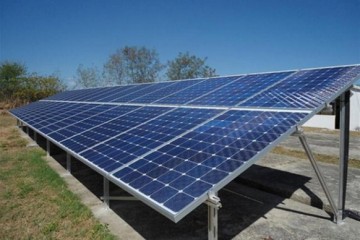
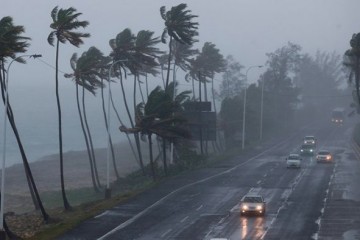
The Cuban preparedness programme to face natural disasters which preceded Hurricane Matthew prioritised the protection of photovoltaic parks and other installations that use renewable energy sources.
Specialised brigades are getting ready to reinstall the photovoltaic parks in the provinces of eastern Cuba, with the same diligence with which they dismantled them before Hurricane Matthew neared the country’s south-eastern coast. This time the taking down and protection of the solar panels was one of the government’s prioritised measures in the preparation against natural disasters.
The authorities reported a poor benefit of the water accumulated in the Cuban reservoirs after the passage of the hurricane.
Compared to other storms, Hurricane Matthew did not leave in Cuba a great accumulation of rainfall as compensation for the strong destruction caused by its winds in the country’s easternmost region. Days after the meteorological event left through Cuba’s northern coast, not many provinces reported some benefit in their reservoirs.
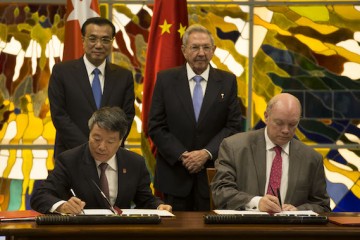
The Cuban government is expanding its commercial and financial relations with two leaders of the Asian and world economy: Japan and China.
Cuba is intensely manoeuvring to shorten the distances with leading Asian economies, in line with the strategy of diversifying commercial ties with the world. Meanwhile, from the Far East they are viewing with interest the largest of the Caribbean islands at a time when the government of Raúl Castro is dialoguing with the United States. Chinese Prime Minister Li Keqiang landed at Havana’s José Martí International Airport on September 24. The day before his Japanese counterpart, Shinzo Abe, departed from the same city.
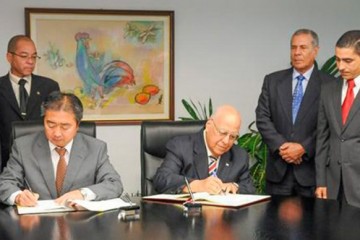
The Asian power accepted writing off around two thirds of Havana’s millions of dollars’ worth of debt in an agreement that is a follow-up to what was agreed upon almost a year ago with the Paris Club.
Cuba took with Japan another important step in its strategy to organise foreign accounts and recover international financial credibility. Both countries signed this week an agreement to regularise the Cuban debt with this Asian power, which is close to 180 billion yens or 1.75 billion dollars.