
Tense labour scene
Cuba closed a year and opened another, deep in two processes very linked to each other, which are attempting to give workers back their leading roles and adapting the labour law to the current economic transformations.
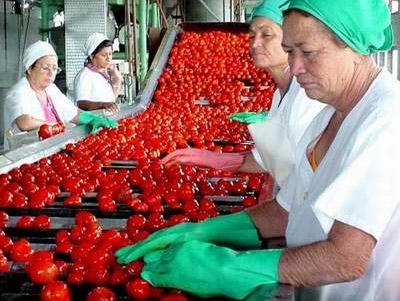
The controversial approval of a new Labour Code introduced novelties to adapt the regulations of the labour world to the economic transformations being undertaken in Cuba.
The year ended in Cuba with the approval by parliament of a new Labour Code and 2014 began with debates at a central union meeting. Both limits reiterated common compendiums: sights are again set on the workers, attempts are being made to relocate them at the centre of social attention and to adapt the labour activity to the new letter of a process of economic changes, which judging by official statements is submerged in objectives of greater complexity.
In last year’s December sessions, the National Assembly of People’s Power agreed to create a commission for the final drafting of the labour law of laws, that would take into account the controversy caused in some points among the deputies. More than 69,000 union meetings had previously discussed the legislative draft, with the participation of more than 2.8 million workers. But the resulting modification of 101 of the articles, the inclusion of 28 new regulations and the complete re-drafting of chapter II, dedicated to union organisations, and of the article on the principles that govern the right to work, among other aspects, weren’t sufficient to contain the MPs.
The deputies found a new reason for confrontation – which led to the not very common approval by the majority; not unanimous – regarding the language classified as sexist. Mariela Castro Espín proposed giving the Code a more inclusive focus, and insisted on explicitly expressing respect for gender identity, a point that in the country caused rejoicing among the defenders of women’s rights and gay orientation.
Castro Espín also got the support of other legislators with the proposal of an addition against labour violence, which would establish employers’ obligation to respect and care for the physical, psychological and moral integrity of employees, through effective mechanisms to attend to their opinions and complaints.
Judging by the press reports, the parliamentary consensus was easier regarding the modifications demanded by the workers and incorporated to adapt the code – in force since 1985 – to the production and service regulations already being incorporated in the country with the implementation in 2011 of the Economic and Social Policy Guidelines starting.
According to the report by the Commission for Constitutional and Juridical Affairs, presided over by José Luis Toledo Santander, the new Labour Code points to the recovery of work discipline, strengthening the role of the administrations in the leadership of the entities and envisages any act of injustice manifested in employer-employee relations.
The secretary of the Council of State, Homero Acosta, one of the polemicists confronting MP Castro Espín, affirmed that the new Code has to do with the relations established today in the labour market, as a result of the economic transformations the country is living.
Points that fired the debate of the workers regarding the draft Labour Code have reappeared in the union meetings summoned to discuss the Draft Document of the 20th Congress of the Central Organisation of Cuban Trade Unions (CTC). The congress is previewed for next February, after the postponement of the date as a result of the legislative delays to approve the new Labour Code, as the authorities acknowledged at the time.
The meetings are retaking old aspirations of autonomy of the unions in the face of the entrepreneurial leaderships and responses to the increasingly tenser general panorama of the country.
While some workers are struggling for the unions to stop being the puppets of the administrations, as they were recently described by a Cuban television analyst, others peacefully assess the organisation’s work styles or demand a greater participation by the workers in the enterprises’ decision making. The newspaper Trabajadores, the official organ of the CTC, revealed that, in the meetings that were held, “one of the most recurrent aspects was the criticism of administrations making decisios without consulting with the union.”
“Many workers don’t see as real their participation in drafting the economic plans,” the publication added, “and consider that these plans are imposed.”
Among the most debated issues, the meetings also have criticised the internal work of the unions, the quality of their leaders, as well as the inflexible and null and void character of the emulation established since the start of the Revolution as a union mechanism to encourage work productivity.
As is logical, the wage systems have been another of the issues most dealt with by the workers, in the midst of economic contingencies that directly affect the income from work and its consisting quality.
The discussed document establishes that the union movement “will defend the policy of not harming the workers’ wages…,” but the truth is that the combination of economic crisis of the 1990s and some more recent economic measures jeopardise the population’s purchasing power, and of the workers in the first place, whose wages are affected, in addition, by the instability in the production pace of their enterprises, be it because of delays in the supply of raw materials or because of their administrations’ inefficiencies.
As a tacit expression of the dissatisfaction and the Cuban economic conflicts, some meetings demanded that the protection of wages go from being a “policy” to being a “principle in union work.”
According to the announcements made last year by the Commission for the Implementation of the Guidelines, the process of updating the Cuban economic model will reach the state-run entrepreneurial world in 2014 through the granting of greater autonomy to its leadership bodies. Thus, a door will open to fix or mitigate the wage dilemma in that vital scenario of the island’s economy. But it will have to foresee more effective ways of worker participation to guarantee the survival of a socialism that continues defending the government and the decisive domestic union sector, which for the sake of protecting unity under the sole umbrella of the CTC has also welcomed in its ranks private workers and other new actors that are gradually emerging in the Cuban economy. (2014)
Su dirección email no será publicada. Los campos marcados * son obligatorios.
Normas para comentar:
- Los comentarios deben estar relacionados con el tema propuesto en el artículo.
- Los comentarios deben basarse en el respeto a los criterios.
- No se admitirán ofensas, frases vulgares ni palabras obscenas.
- Nos reservamos el derecho de no publicar los comentarios que incumplan con las normas de este sitio.
