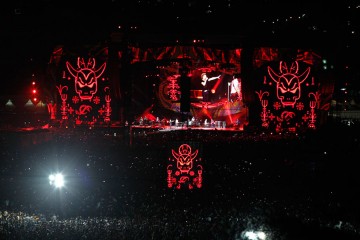
The miracle took place, it’s already history: The Rolling Stones gave a concert in Havana before hundreds of thousands of persons gathered in a wide space of the Ciudad Deportiva. Who would have predicted this some years ago? Not even Nostradamus would have dared predict this.
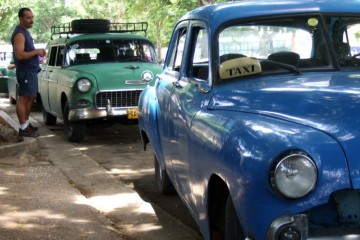
Among the characters of a new type who have moved to the Cuban social centre stage in recent years, the intermediary (or go-between) holds a visible, noted place in any of the service spaces. Their performance is never protagonist but rather it is secondary, but their role always calls attention. But how is this manifested? What is their field of action? What do they control (or put out of control)?
The Dictionary of the Spanish Language characterises the intermediary thus: (From to intermediate): Said of a supplier, shopkeeper, etc.: Who mediates between two or more persons, and especially between the producer and the consumer of goods or merchandise”; while the go-between is someone who “acts by brokering relations between two or more persons or entities.”
Not exempt of vulnerabilities, Cuba is advancing in the implementation of adaptation based on ecosystems and the protection of natural heritage in the new conditions of the global climate. Its human capital, its scientific potential and the boost to citizens’ participation are part of its greatest strengths.
Cuba’s response to climate change would seem like a Quixote battle: its condition of a developing island country very near to the Tropic of Cancer multiplies the vulnerability to possible negative impacts of this phenomenon. Neither is there a lack of inventiveness and nobility in the strategies to face it, which include the coordinated intervention of actors at all levels of environmental management and provincial administrations; the boost given to citizens’ participation; and the use of the scientific potential for deciding on the future scenarios and the establishment of measures.
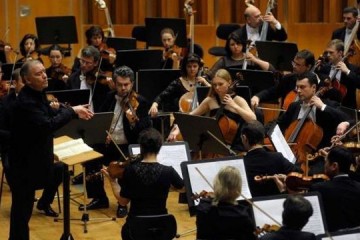
Its single concert in Cuba was a singular master class on coherence and vitality of the Russian musical tradition as well as a display of virtuosity.
Until a short time ago for us the name of the Saint Petersburg Mariinsky Theatre was the patrimony of ballet aficionados. The coliseum dedicated to Maria Alexandrova, wife of Tsar Alexander II, has a special place in the history of that art: Marius Petipa taught there for many years; the canonical productions of classics such as Swan Lake, Sleeping Beauty and Nutcracker were performed there. Its hall full of gold was witness to memorable performances by Anna Pavlova and Vaslav Nijinsky. Some of us also knew about its role in the history of Russian opera, but only now have we become aware of the value of its orchestra thanks to the single concert it offered in the Avellaneda Hall of the National Theatre of Havana last March 6 under the baton of its director Valery Gergiev, currently considered one of the world’s great conductors.