Pope Francis’ visit to Cuba has been added to a series of recent statements and gestures from Washington and Havana against a policy of economic harassment that will be voted on at the United Nations General Assembly.
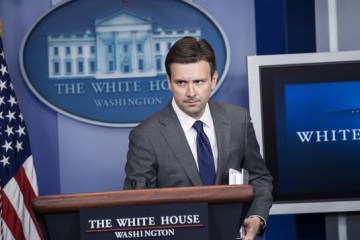
Several news reports have accumulated during the most recent days regarding the race against the U.S. blockade on Cuba. Despite the favourable talks between both countries to normalise relations, Havana again asked for the resolution that the United Nations General Assembly approves every year to condemn that policy of commercial, financial and economic harassment. In a more surprising gesture, Washington hinted at the possibility of abstaining, for the first time, during the UN voting. And a few hours ago the Vatican reiterated the Pope’s intention of sitting down with the U.S. president to demand the end of the blockade.
Cuba is adopting emergency solutions like artificial precipitations and the relocation of livestock and crops, in the face of the worse drought suffered in more than a century.
The heat literally has Cubans on pins and needles. Havana registered an absolute record of 38.2 degrees Celsius on Saturday September 12, 1.2 degrees higher than the previous maximum registered in April of this same year. The rest of the archipelago is also boiling. Experts estimate that 2015 is the hottest year in Cuba since 1951. The climate mercilessly denies rains. The country’s largest reservoir, the Zaza, is storing barely 16 per cent of its capacity of a billion cubic metres and the rest of the reservoirs aren’t doing better. At the start of September the dammed water throughout the country did not surpass 38 per cent of the possible volume. Experts are already describing the current drought as the worst suffered in Cuba in 115 years.
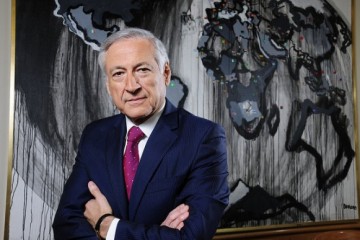
Both countries signed six important agreements during the Chilean foreign minister’s visit to Havana heading a numerous business delegation.
Chile joined the troop of government, parliamentary and business delegations that continue landing in Cuba to strengthen political and commercial ties since the start of public talks with the United States late last year. In recent days Belgium, Mexico, Panama and Spain also joined the dozens of previous visits, while the European Union received Cuban Foreign Minister Bruno Rodríguez. Meanwhile, U.S. businesspeople reiterated their interest in recovering and expanding trade with the country that Washington has economically blockaded for more than five decades.
One of Cuba’s principal financial institutions has adopted a more aggressive strategy approach to a sector that doesn’t show much enthusiasm about the credit offers created in 2011.
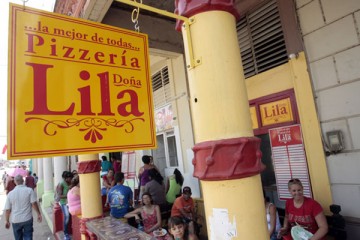
The Cuban economy continues opening spaces for the private sector with alternatives that try to strengthen, on a par, the projection of national banking. Through the creation of the “administrators of private workers,” the Banco Popular de Ahorro (BPA) this year resorted to a new strategy to approach businesses that, until now, have preferred to seek financing at non-official doors.