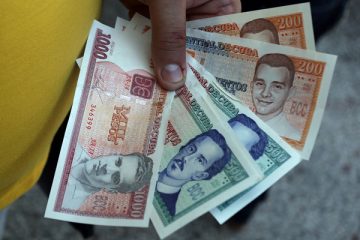
Some 200,000 persons must pay their income tax from last year in upcoming weeks.
With the promise of faster fiscal procedures, a tax process began in Cuba in which some 200,000 individuals will participate, according to the income for 2016 each one declares. Data from the authorities contribute as antecedent a substantial increase in the payment of income tax a year ago.
This article, by the famous Cuban writer, was originally published in Portuguese in Folha de Sao Paulo and is reproduced in Spanish and English thanks to an agreement with IPS Cuba.
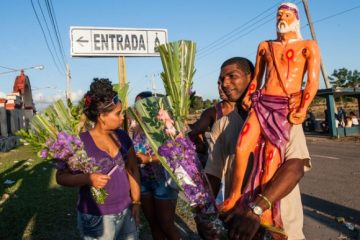
For Cubans, believers and atheists, number 17 has magic connotations, definitively cabalistic. In the spirituality of those born on this island, the first connotation of the number dates back to December 17, the Day of San Lázaro, a very venerated saint and famous for miracles, rejected for decades by the Vatican and that, among the believers of the increasingly more popular Afro-Cuban religions, is identified to the orishaBabalú Aye, also powerful and given to working wonders. For gamblers, it is an especially attractive number. For common people it is a number full of an unexplainable magnetism. In short, 17 is not just any number.
In an effort to multiply power generation with renewable energy, the Cuban economy is strengthening its alliance with a world leader in new energy alternatives.
This January Cuba confirmed its policy of breaking away from the long dependence on oil when it allied with China, one of the leading nations, by need, in the development of renewable energy sources. During a three-day forum in Havana, the two countries signed 10 agreements to prop the official programme directed at transforming power generation in the Caribbean nation.
For Cubans, Gabriel García Márquez was the writer par excellence and everyone talked of Macondo as well as the entire Buendía progeny.
Half a century has gone by since a group of distracted readers opened in Buenos Aires a novel by an unknown author and they started reading these rather hallucinating lines: “Many years later, facing the firing squad, Colonel Aureliano Buendía would recall that far-off afternoon in which his father took him to see the ice.” One Hundred Years of Solitude had been born.