With the best economic growth of recent years, the Cuban economy closed 2015 with key agreements to reorganise its international financial ties, reactions in tourism and signs of change if the normalisation of relations with the United States advances. But the process of updating the economic model has still not met important goals.
In Cuba, 2015 was a year that passed through foreseeable paths after the global surprise caused, at the close of the previous year, by the announcement made by presidents Raúl Castro and Barack Obama. The imminence for the first time of the possible end to an era of bilateral entrenchment, which had reached very bitter and aggressive tones, came as a shock to many persons worldwide.
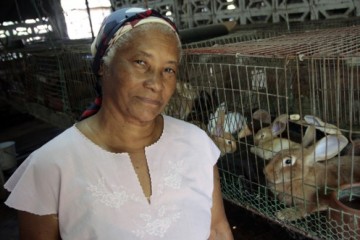
A demographic dynamics that has among its principal profiles the progressive population aging and whose challenges point to several spheres of Cuban life which need to be dealt with based on present-day events is appearing behind the visible grey hair of many Cuban women.
To categorically affirm that “Cuban women are letting their hair go grey” is, without a doubt, an uncertain generalisation; however, the reason to say this is not sensationalist, its aim is for it to be a call to attention regarding a “phenomenon” that, though isolated, can be seen especially in the immense majority (or immense minority…?) of Havana artists, writers, journalists and cultural promoters…; beautiful women, some of them very beautiful in the recent past and still today, who are in the so-called third age.
The 58th edition of the Caribbean Baseball Series, held in the Dominican Republic, has left a storm in the largest of the Caribbean islands, a hurricane of opinions on the national sport, turning it into an epilogue after the tournament ended. And if discussing baseball was always a mark of identity here, now – actually for a long time – those controversies go beyond the sports sphere.
A commercial bank from the Asian giant granted Cuba financing lines to purchase railroad coaches and tractors to back rice production.
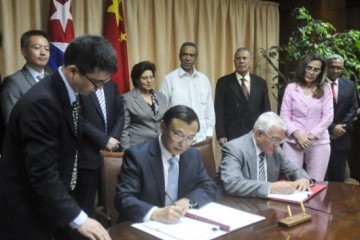
An important Chinese bank, the Exim Bank, gave Cuba credits for the purchase of equipment and inputs that will guarantee two of the economic programmes prioritised by the largest of the Caribbean islands in recent years: the development of the railroad system and rice production. The signing of the financing agreements took place on Monday, February 22 in Havana with the participation of high-ranking officials of the Cuban government and the Asian giant’s institution.