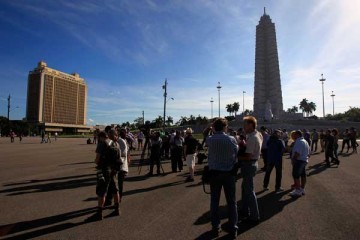
Pope Francis’ apostolic trip to Cuba and the United States, between September 19 and 27, is analysed by Father Román Espada, a Cuban Jesuit priest, who paid great attention to the Holy Father’s trip to both nations and very kindly accepted to share his comments with this publication.
Still with limitations, Cuban feminists are gaining ground in cyberspace, a “virtual world” from which they have started having an influence on the local reality with concrete demands.
A symbolic revolution has gotten to our lives in the last decade with the appearance of the social networks and the new Internet media, where the news hierarchies are being diversified and the notions of the intimate, the ethical and the private are beginning to change.
Some of the greatest challenges identified nowadays for the development and sustainability of one of the most important economic spheres for Cuba, international tourism, deal with competitiveness, risks, investments, the development of human capital, quality and business autonomy.
1- Is the Cuban tourist product losing competitiveness?
Some facts with a certain amount of reliability confirm this is the case. Cuba is not a young but rather a mature destination. Experience comes with maturity, but also fatigue, which is normal. Every year the FutureBrand consultancy company applies a survey of 3,500 travellers from 14 large markets and 12 Focus Groups of different world cities to assess their country image. In the report of the 2010-2012 three year period Cuba appears in 14th place of the 20 first Latin American destinations. In 2010 it ranked 50th and in 2012 it went down to 57th. The survey distributes a group of attributes in five measurements: tourism, heritage, culture, business climate, quality of life and system of values. The results are surprising and, in some aspects, not very reliable. For example, in terms of safety, Cuba appears after Chile, Uruguay and Costa Rica. It only ranks first in the health and education system (of course).
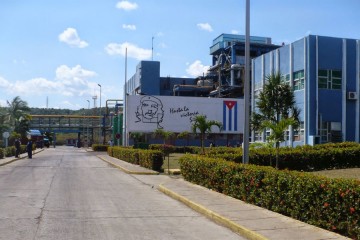
With a 1.2 billion euro credit, the Russian government is financing the construction of four power generation units in the largest of the Caribbean islands.
Russia granted Cuba a credit for the construction of several power generation plants, giving continuity to the cooperation agreements signed a year before by both governments and the tradition of helping in the energy sphere developed between Havana and Moscow during the times of the Soviet Union.