Pope Francis’ visit to Cuba has been added to a series of recent statements and gestures from Washington and Havana against a policy of economic harassment that will be voted on at the United Nations General Assembly.
Several news reports have accumulated during the most recent days regarding the race against the U.S. blockade on Cuba. Despite the favourable talks between both countries to normalise relations, Havana again asked for the resolution that the United Nations General Assembly approves every year to condemn that policy of commercial, financial and economic harassment. In a more surprising gesture, Washington hinted at the possibility of abstaining, for the first time, during the UN voting. And a few hours ago the Vatican reiterated the Pope’s intention of sitting down with the U.S. president to demand the end of the blockade.
In recent days, the Cuban educational authorities declared themselves in favour of the extension and in-depth teaching of English in our universities. For the majority of those who heard these statements it hasn’t been difficult to understand that with the reestablishment of diplomatic relations between Cuba and the United States possibilities are being opened not just in the field of tourism, but also in academic, artistic or sports exchange, and Cubans are required to pay greater attention to the neighbour’s language, a bit neglected in recent years.
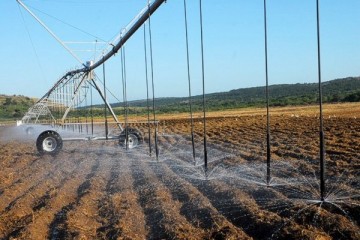
Cuba is adopting emergency solutions like artificial precipitations and the relocation of livestock and crops, in the face of the worse drought suffered in more than a century.
The heat literally has Cubans on pins and needles. Havana registered an absolute record of 38.2 degrees Celsius on Saturday September 12, 1.2 degrees higher than the previous maximum registered in April of this same year. The rest of the archipelago is also boiling. Experts estimate that 2015 is the hottest year in Cuba since 1951. The climate mercilessly denies rains. The country’s largest reservoir, the Zaza, is storing barely 16 per cent of its capacity of a billion cubic metres and the rest of the reservoirs aren’t doing better. At the start of September the dammed water throughout the country did not surpass 38 per cent of the possible volume. Experts are already describing the current drought as the worst suffered in Cuba in 115 years.
In Cuba, a country that must put a great deal of effort in being economically viable, politically participative, socially just and ecologically sustainable, the Church must retake, in a creative and complex way, the relation between faith and politics.