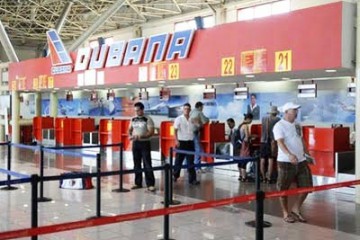
A TV screen shows on the closed circuit channel of terminal 3 of Havana’s José Martí International Airport a paradisiacal scene of some place on the island, accompanied by a sign that says: “The first image of Cuba.” But the truth is that to be able to see even the exterior always in darkness (if it’s in the evening, of course) and hot (especially in summer) of the air terminal, the recently arrived have to go through three strict controls (migratory the first, customs the other two) that are not precisely paradisiacal, and that serve to warn the recently arrived visitors and to remind them that when returning to their country of birth (and at times even of residence) they have arrived in a place where you always must answer questions, no matter how much your documents and belongings are in order: where are you coming from? On what flight? Where are you going to stay? What you have in your bag is an audio device for automobiles? How many suitcases are yours? Are you bringing in food? Are you travelling on an official mission? Did you already import something this year?…among other possible questions.
Empresarios e investigadores incentivados por potencial para producir derivados, en especial, energía.
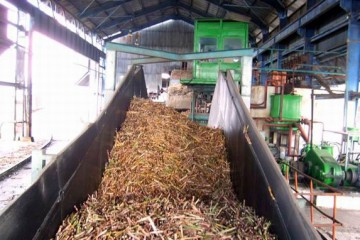
Aunque el aumento de la producción de azúcar en los últimos tres años levanta moderadamente los ánimos, el potencial para producir derivados, en especial, energía, motiva en igual medida o más a empresarios e investigadores.
Después de haber caído casi en coma durante la década pasada, la industria que alguna vez fuera reina y señora de la economía cubana empieza a enviar señales de reanimación. Aunque todavía muy por debajo de los récord de finales de los años 80, la extracción azucarera registró avances en las tres últimas zafras. Pero los síntomas de recuperación no se limitan a un crecimiento en la producción de azúcar.
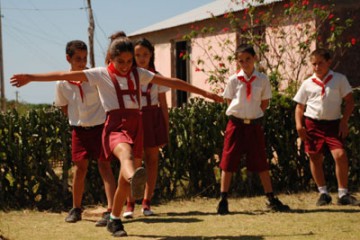
When Finland ranked among the first countries in science, reading and mathematics because of its excellent results, according to the 2002 report by the International Programme for International Student Assessment (PISA) of the Organisation for Economic Cooperation and Development (OECD), even the major world powers viewed the small and cold European country with surprise and interest. Three years later a new report revealed similar results to confirm that this was not by chance. Since then the specialists and the means of communication continue seeking an explanation that justifies such exceptional achievements. And even when they have not come to an agreement in their opinions, they all coincide in one way or the other in one point: it seems that Finland has been able to establish and consolidate one of the best educational systems in the world.
Among other challenges, Cuban society must publicly identify and deconstruct the asymmetric relations between sexes and genders.
Introductory clarifications
Gender is a recent topic in Cuban academia, which continues being reluctant to accept this analytical focus. This academia has officially been aligned with a falsely monotonic view of reality, which is always rich in diversities, nuances and the complexities of both.