
Anna Pavlova, el centenario de su primera visita

El paso perdurable de una estrella.
El paso perdurable de una estrella.

Análisis de la obra más reciente del realizador cubano Enrique (Kiki) Álvarez.
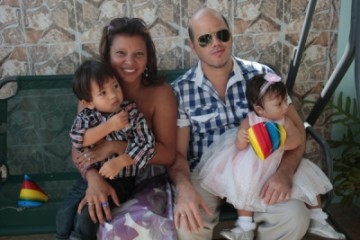
The prevalence of a patriarchal ideology in Cuban society and, therefore, in health and justice professionals, has an incidence in their low perception of sexist violence and the little visibility of that problem on a social level. In addition, the lack of specialised institutional mechanisms to attend to that problem strengthens the idea that it is a private matter, when actually it demands a social response.

Participation is fundamental to the process of constructing citizenship, and specifically sexual citizenship, on the road to achieving the true equality and emancipation of human beings.
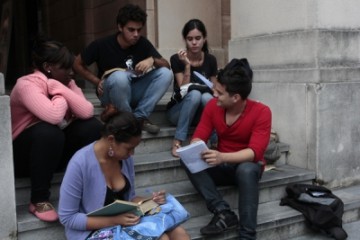
Educational institutions can be spaces promoting gender equality as well as centres for the reproduction of discrimination, whose naturalisation is one of the elements favouring the longevity of patriarchy.

A system of provincial media functions in Cuba that does not assume the communication or institutional models of the local press.

After the new opening to self-employment in Cuba in 2010, child care continues being an option, one of the few authorised activities involving services traditionally carried out by women. The incorporation of women to that activity has been significant until now. According to the Employment Department of the Labour and Social Security Ministry, in November 2011 a total of 1,460 persons had applied for child care licenses nationwide, of which 1,445 were women (99%).

