The economic transformations in Cuba this year have made incursions into the business sphere, deregulate the forms of payment to workers and almost increased threefold wages in the health sector.
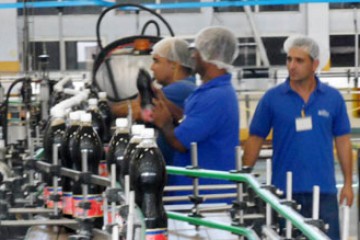
After being the focus of interminable controversies and dissatisfactions in the corridors of enterprises, workers’ meetings, in the streets and gatherings of friends, wages came up this year in the strategy of the Cuban economic transformations. After keeping them in the background, or frankly frozen, the authorities made several moves in that field to give some breathing space to workers and the very process of reforms identified as Updating of the economic model.
I just read in the press that a group of scientists is about to present Li-Fi, a wireless connection that will become the fastest in the world and will make it possible to transmit data at speeds impossible until now. Compared to the Wi-Fi connection, which is carried out through radio waves, the Li-Fi connection is carried out “in a connection of ultra-parallel visible light,” which could complement and even replace in some cases the Wi-Fi. Even though it seems like science fiction, the scientists affirm that in the near future a simple light bulb could make it possible to connect to cell phones.
After achieving the lowest GDP increase of the last six years, the government aims to boost the economy’s growth to more than four per cent in 2015.
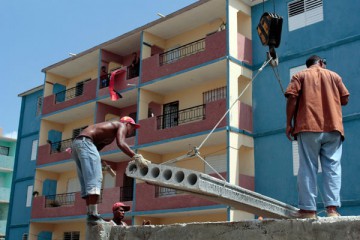
The Cuban economy is shaking off the dust of three years of frank slowdown and aims to recover a more solid growth rate through the injection of a strong investment activity, among other factors.
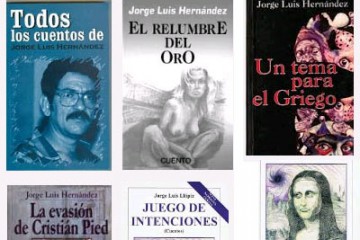
When my dear friend and colleague Aida Barh asked me to present the collected short stories of Jorge Luis Hernández I had two revelations: the first was a strong sensation of commitment, of need, of debt not met with the work of Jorge Luis Hernández, which I had not visited again for too many years. The second was slower but at the same time more overwhelming, almost dramatic: I felt a flash of nostalgia since it became evident to me that ever since several years before Jorge Luis had died, treacherously attacked by a tragic fate which he did not deserve, nor much less us for having lost him as a writer, as a person, as a friend, I had not visited Santiago de Cuba again.