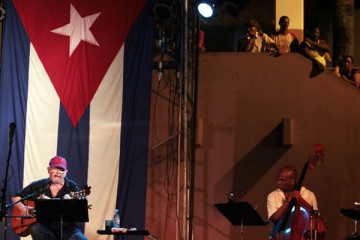
Stories and lives after Silvio Rodríguez’ music through Havana barrios.
One of the qualities that distinguish good art is that of having double the capacity of moving us while making us think. To be more emphatic: touching our heart while activating our brain. And that is what happens at the end of the 80 minutes of the documentary Canción de barrio (Silvio Rodríguez en dos años de gira interminable) (Barrio Song [Silvio Rodríguez in Two Years of Never-Ending Tour]), by Alejandro Ramírez Anderson, a material that, while telling the story of those two first years of concerts by the renowned singer-songwriter through different Havana barrios, reveals what can be considered the hidden side of the existence of some persons living in the Cuban capital in material and spiritual conditions of painful poverty.
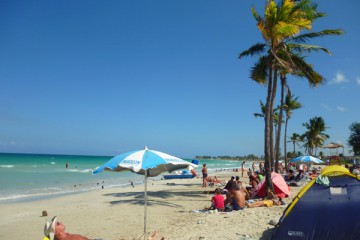
The peak tourist season began in Cuba with a record number of arrivals and prospects of an important expansion in one of the sectors that contributes the most hard currency to the island’s economy.
2014 closed with a record dreamed by the leisure industry in Cuba for several years: it finally received three million tourists. After consecutive yearly frustrations because of not achieving that figure, unsuccessfully planned once and again, last December 30 the Tourism Ministry (MINTUR) announced the arrival of that amount of international visitors, 5.3 per cent higher than the previous year.
The prospect that the GDP grow more than 4 per cent in 2015 hints to a first solid reaction to the transformations undertaken several years ago, at a historic moment and of numerous question marks for Cuba.
The two most relevant news in Cuba in several decades – also one of the main ones in 2014’s international ranking – did not completely annul the impact of the economic report presented by the government to the National Assembly of People’s Power before the end of the year. The exchange of prisoners and the simultaneous announcement by the presidents of Cuba and the United States about the resumption of diplomatic relations overjoyed so much the Cuban people, leaving them almost breathless for the usual citizen debate about the economic results of the year and the forecasts for the next. But they did not eliminate the question marks or commentaries. They rather highlighted the doubts and expectations.
Cubans employed in enterprises with foreign capital participation will receive wages negotiated on bases more adapted to regional practice.
The Cuban government put in place this month a new payment system for workers hired by foreign enterprises. The measure, implemented in a year of transformations in the policy to attract foreign capital, seeks a more encouraging retribution for the personnel working in companies with a great impact in the country’s economic results.