In his indispensable study Cuba/España, España/Cuba: Historia común (Cuba/Spain, Spain/Cuba: Common History), Professor Manuel Moreno Fraginals, one of the most provocative and restless historians who have interpreted Cuba’s evolution, analyses and at times destroys several of the historic myths that, in one or another way, became established in the accepted perception of the country’s colonial past.
The most recent Cuban government report confirms an increase in millions of dollars’ worth of costs because of Washington’s policy of commercial and financial harassment and a merciless attack on third country banks.
The damages of the U.S. economic blockade on Cuba have increased in the last year, this time due to the Obama administration’s concentration of pressures on a particularly sensitive sector of the economy: banking. The new version of the report that the Cuban government presents every year before the United Nations General Assembly gives details on the consequences for the health and education systems, trade and the industrial sector, but places emphasis on the U.S. persecution of Cuba’s financial ties abroad.
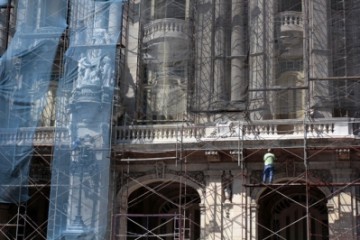
Faced by the ravages of time, oblivion or ignorance, the conservation, study and promotion of tangible and intangible heritage are vital in view of cultural colonialism.
“It’s from abroad,” an actress repeated on a humour programme on Cuban television, as a guarantee of a product’s quality. This is not one of the performer’s bits, but rather a phrase the script writer took from the street and that confirms a feeling of undervalue proper of the underdevelopment enthroned in our very identity and which generates perversions of the people’s spirit, like wanting to be like someone else, linked to the racial and cultural stereotypes in tune with the image promoted by the major media.
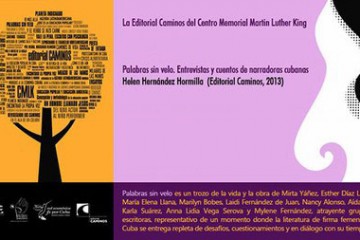
I once asked researcher and essayist Luisa Campuzano up to what point it was positive to differentiate, distance and extract from the literary corpus the literature written by women or related to women. And though the procedure continues to not please me, I recognise as valid the answer given to me by Campuzano at that time: “if the literature written by women is studied apart it is to highlight it, to make it visible.”