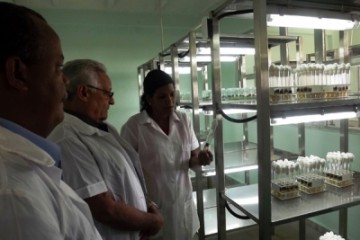
The government is undertaking the reorganisation of a sector in which it has traditionally pinned great hopes but which has provided it with patent benefits.
A few days ago new laws came to light in Cuba, in another attempt to reorganise a sector that has absorbed substantial resources but has not met all the hopes that at some time were pinned on it. With the explicit aim of turning science and technology into a more effective factor for development, the government approved a decree law and three resolutions, published last August 29 in the Gazeta Oficial Extraordinaria.
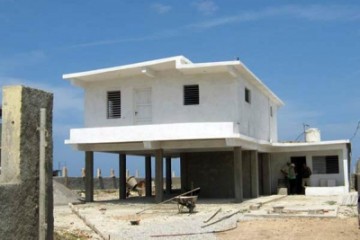
The concept of resilience has imposed itself as an effective means to face the growing tendency of occurrence and negative effects of natural disasters in the constructed environment.
It is generally understood as the ability of a system and its components to anticipate, mitigate, adapt or recover from the effects of a major disaster, in a timely and efficient way; though in a more global vision it is opportune to understand it as the capacity of persons, communities, organisations or the countries exposed to disasters, crises and underlying vulnerabilities to anticipate, reduce the impact and face the effects of adversity, to later recover without compromising their long-term perspectives.
For a country like Cuba, located in the Caribbean Sea, leeward of the Sahara – the principal source of the planet’s dust – and frequently hit by tropical cyclones.
The Saharan dust clouds that travel thousands of kilometres and have an impact on the climate, weather, environment and health of human beings, as well as of animals, plants and complete ecosystems, marine and land, of the territories under its influence, including Cuba, which is only affected from March to October, also produce a great biogeographical dispersion of pathogens.
Architect, scientist, professor at the José Antonio Echeverría Higher Polytechnic Institute, and member of the Cuban Academy of Sciences.
Summary: In close connection with climate change, cities need to be more sustainable, and their architecture needs to change, particularly on the Caribbean islands, where there is a growing threat of flooding, heavy winds and the loss of much of these island states’ territory.