Gender image of a group of university students: advances or immobility?
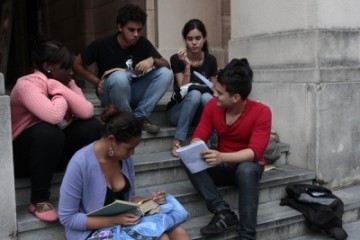
Educational institutions can be spaces promoting gender equality as well as centres for the reproduction of discrimination, whose naturalisation is one of the elements favouring the longevity of patriarchy.

In Cuba, the institutional laws and policies favour the access of women and men to university, as well as professional work; but historic-cultural mandates prevail that determine different ways of socialising for one and the other based on what is conceived as feminine and masculine. The social and subjective changes are not on a par with the implemented laws and policies. After working for five days with a group of young university students it was possible to reveal a gender image that, while inheriting traditional ways of conceiving gender relations, attempt to incorporate innovative ideas and seeks referents – non-existing – that distance themselves from what is understood as inequalities, which is why they are constantly submitted to contradiction and to a way of conceiving reality in tension, typical of contemporary times.


Leer más


About Mariel and the Cuban queer diaspora

Conversation with a “Marielito” who doesn’t bear a grudge because he was expelled from his country, but neither is he prepared to erase his past.


Does the Labour Code protect domestics?

The new Code covers a group of transcendental aspects for the labour relations of those working today in the non-state sector, including remunerated domestics, but there are still gaps that must be bridged.


Spectacles for gender, from childhood

Though the government’s will and many of the policies established are directed at trying to position a gender-related focus in the different spheres of Cuban society, a great deal of the population and among many key social actors there are still sexist representations regarding gender, which reproduce discriminatory, biased and not very healthy practices for women and men. In this context, it is pertinent to work on the subject matter of gender during childhood, with an educational intention. This allows for having an early influence in the process of forming the personality and promoting beliefs and values coherent with gender equity.


Share